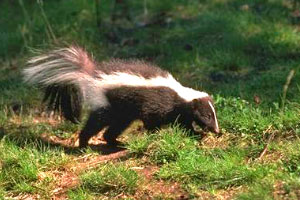
 Skunk on grass and dirt.
No, it is not legal in California to keep non-releasable native wildlife.
A wild animal deemed non-releasable by CDFW, a wildlife rehabilitation professional, or veterinarian are humanely euthanized - or may be considered a candidate for captive placement at a restricted species facility permitted pursuant Title 14 CCR § 671.1. Wild animals in captivity have special requirements to ensure all conditions are met to maintain animal welfare. Restricted species facilities may include accredited zoos, educational organizations, and universities.
CDFW often receives inquiries about why certain exotic animals - allowed as pets in other states - are NOT allowed as pets in California. The most common examples are ferrets, hedgehogs, sugar gliders, gerbils, monkeys, and monk parakeets.
These animals are prohibited because they pose a threat to California native fish and wildlife, agriculture, public health or safety pursuant CA Fish & Game Code § 2118. There are many concerns related to competition with native species, predation, and potential disease transmission when any non-native animal is introduced into the wild.
Legal possession of a restricted species may be allowed under a Restricted Species Permit issued pursuant Title 14 CCR Section 671. CDFW is authorized to issue permits only to qualified individuals or institutions for limited purposes such as research, public exhibition, education, or shelter. Permits are not issued to import or possess any wild animal for pet purposes.
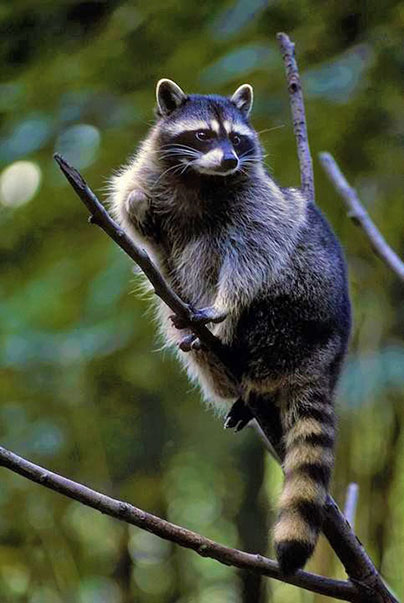 Raccoon in tree.
Many wildlife can be seen day or night. A wild animal that is active during the day may be normal and healthy.
- Some wildlife may adapt their behaviors to be more active during the day and closer to humans.
- These animals may be searching for food, rearing young, or seeking mates.
- Humans can attract wildlife by providing resources (e.g. food) - sometimes without even knowing it.
As the human population grows, human-wildlife interactions and wildlife sightings may increase.
In California, one example is coyotes and foxes in urban environments.
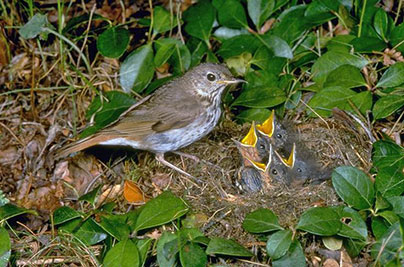 Adult bird with 4 baby birds.
Contact a local wildlife rehabilitator or facility to report sick, injured or orphaned wildlife.
- Most rehabilitators are not "on-call" (24 hours).
- Most rehabilitators do not capture or transport wildlife.
- Most rehabilitators are volunteers. Please be kind.
You may also contact a local animal services division for information or possible assistance.
CDFW proudly works with agencies, organizations, and volunteers to to ensure quality rehabilitation of injured, orphaned, and displaced wildlife for the purpose of release to the wild.
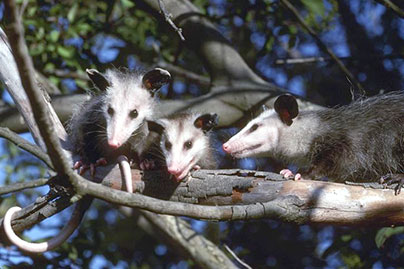 Wildlife provide valuable ecosystem benefits.
Many "nuisance" species are harmless and may be managed to reduce conflict. Safe co-existence is possible.
- Contact the UC Agricultural & Natural Resources Integrated Pest Management Program for assistance.
- Wildlife cannot be trapped and released elsewhere.
- Wildlife may be "removed" through non-lethal deterrence or lethal methods like trapping.
Fish & Game Code § 4152
- Nongame mammals, black-tailed jackrabbits, muskrats, non-native red foxes, and red fox squirrels found to be injuring growing crops or other property may be taken at any time or in any manner in accordance with this code and regulations Inspection and removal shall be done by the person who sets the trap or the owner of the land where the trap is set or an agent of either by the owner or tenant of the premises or employees and agents in immediate possession of written permission from the owner or tenant thereof.
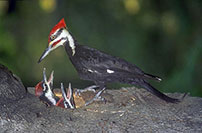 1 adult and 2 baby woodpeckers in tree.
Report wildlife that cause damage to your property or harm your domestic animals to the CDFW Wildlife Incident Reporting online system or Regional Office.
Fish and Game Code § 4181
- Any owner or tenant of land or property being damaged or destroyed or in danger of being damaged or destroyed by elk, bear, beaver, wild pig, wild turkeys, or gray squirrels, may apply to CDFW for a permit to kill or haze the animal.
- It shall be unlawful for any person to violate the terms of any permit issued under this section.
- Fish and Game Code § 4181.1 - Take Bear or Wild Pig in Act of Injuring Livestock; Reporting Requirement.
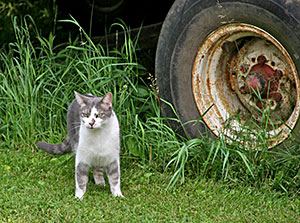 Cat standing in grass next to automobile tire.
Contact your local Animal Services Division for information and assistance regarding domestic animals (living or dead) on private or public property.
- Contact the Department of Transportation local office to report dead animals on or near roads.
CDFW does not remove domestic animals or livestock (living or dead) from private or public property.
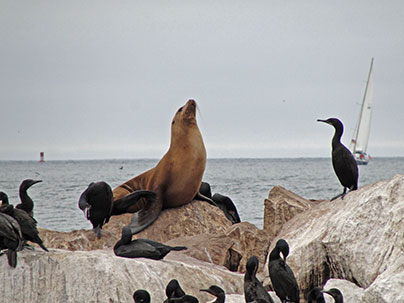 Seal and birds on a rock with water and a sailboat in the background.
Contact the National Oceanic and Atmospheric Administration (NOAA) to report dead, injured, sick, entangled or stranded marine mammals at (866) 767-6114.
- Timely reporting is the best way to ensure authorized responders know about an incident and can take appropriate action.
- Marine mammals are protected by State and Federal law, and the Marine Mammal Protection Act.
- Marine mammals include whales, dolphins, porpoises, seals, sea lions, and sea otters.
Always keep a safe distance—it’s good advice, and it's the law.